
Artificial Intelligence is rapidly changing how data analysts work. While most professionals are familiar with tools like Power BI, Python, SQL, and Excel, a new category of AI tools is emerging: autonomous AI agents.
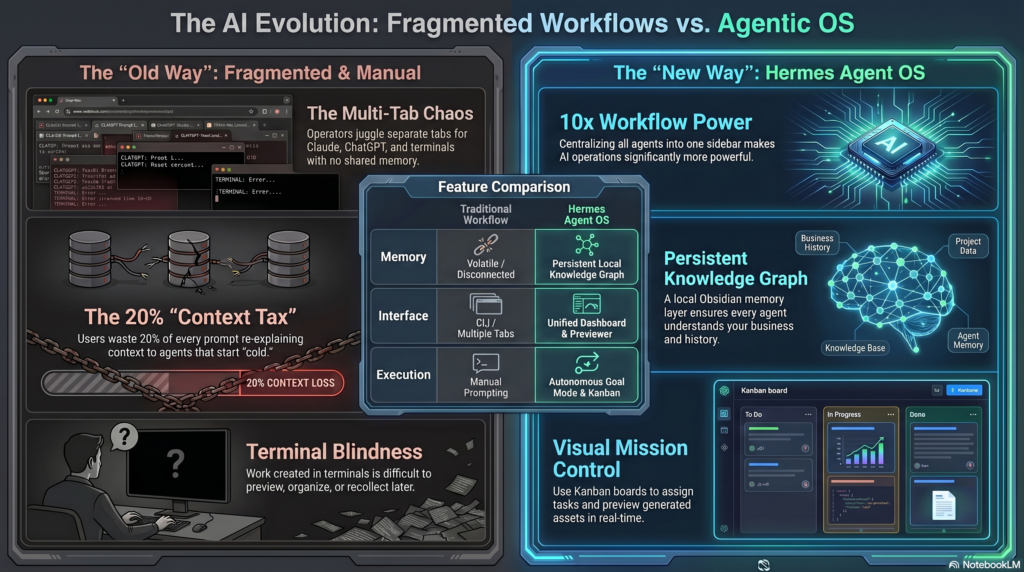
One of the most interesting developments in this space is Hermes Agent, an open-source AI agent developed by Nous Research. Unlike traditional chatbots that forget conversations when a session ends, Hermes Agent is designed to maintain memory, learn from previous tasks, create reusable skills, and improve over time.
As a data analyst, I’ve been exploring how AI agents can reduce repetitive work and accelerate analytics projects. Here are some practical ways Hermes Agent can fit into a modern data analytics workflow.
What Makes Hermes Agent Different?
Most AI assistants require you to repeatedly explain your project, datasets, business requirements, and reporting objectives. Hermes Agent takes a different approach by maintaining persistent memory and creating reusable skills from successful tasks.
This means the agent can gradually learn:
- Your reporting standards
- Preferred Power BI design patterns
- Common DAX calculations
- Client-specific requirements
- Documentation formats
- Data validation procedures
The longer it runs, the more context it accumulates.
How Data Analysts Can Use Hermes Agent
1. Automated Data Cleaning
Data preparation often consumes more time than analysis itself.
Hermes Agent can assist with:
- Identifying missing values
- Detecting duplicate records
- Generating cleaning scripts
- Standardizing column names
- Validating data quality rules
Instead of repeating the same instructions for every dataset, the agent can learn your preferred cleaning workflow and apply it consistently.
2. Power BI Development Assistant
Power BI developers spend considerable time building measures, optimizing models, and documenting reports.
Hermes Agent can help:
- Generate DAX measures
- Suggest model optimizations
- Review relationships
- Create report documentation
- Build KPI definitions
- Explain complex calculations
For consultants managing multiple Power BI projects, this can significantly reduce development time.
3. SQL Query Generation
Many analysts frequently switch between business requirements and SQL development.
Hermes Agent can:
- Convert business questions into SQL queries
- Optimize existing queries
- Generate joins and aggregations
- Create reusable SQL templates
- Explain query performance issues
4. Research and Documentation
Analysts constantly research business domains, KPIs, and industry metrics.
Hermes Agent can:
- Collect information from multiple sources
- Summarize research findings
- Generate documentation
- Create project notes
- Maintain knowledge repositories
5. Client Reporting Automation
For freelance analysts and consultants, reporting can become repetitive.
Hermes Agent can assist in:
- Weekly report preparation
- KPI summaries
- Executive dashboards
- Meeting notes
- Project status updates
Because it remembers previous work, the reporting process becomes more efficient over time.
Why This Matters for Power BI Professionals
The future of analytics is not just dashboards; it’s intelligent systems that help analysts work faster and focus on decision-making rather than repetitive tasks.
Imagine an AI agent that already knows:
- Your favorite DAX patterns
- Dashboard design standards
- Data modeling preferences
- Client requirements
- Reporting templates
Instead of starting from scratch every day, you’re building on accumulated knowledge.
Final Thoughts
Hermes Agent represents an important shift from AI assistants to AI collaborators. Rather than simply answering questions, it can become part of a long-term analytics workflow that continuously improves through experience.
For data analysts, Power BI developers, and BI consultants, this opens exciting opportunities to automate repetitive work, improve productivity, and spend more time delivering insights that drive business decisions.
As AI agents continue to evolve, learning how to integrate them into analytics workflows may become just as important as learning SQL, Python, or Power BI.